
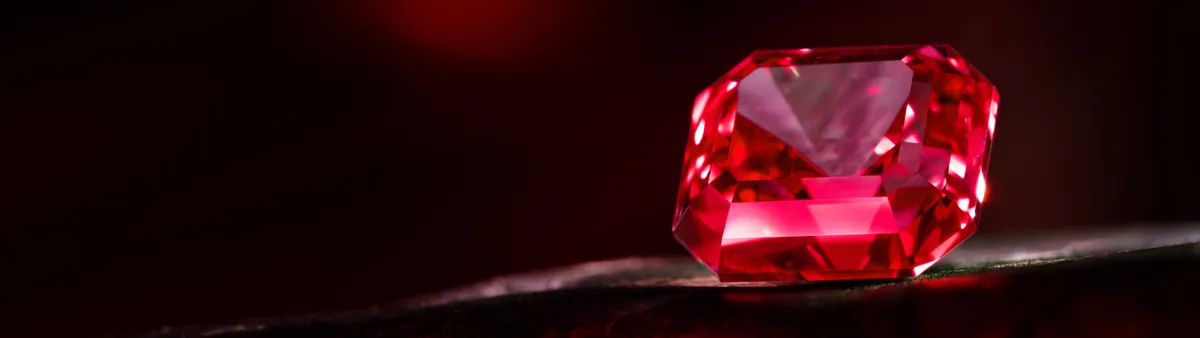
Radiating deep red brilliance, the ruby is the iconic July birthstone treasured for centuries. This complete guide from Hollingsworth Jewelers uncovers fascinating ruby facts, from its ancient origins and captivating symbolism to how it can continue shining in timeless jewelry designs and birthstone collections.
Early legends described rubies as born from divine fire, or in simpler terms, celestial lightning. Some believed they were formed by godly tears. Others even thought that they were the blood of the earth itself. Their intense red glow led many to believe the stones burned with an inextinguishable inner flame, one that could never be hidden or stolen.
It's no wonder Sanskrit texts crowned the ruby ratnaraj, "king of precious stones," prized for its rarity, hardness, and supposed mystical powers. Philippe de Valois echoed this in "Lapidaire," calling it "the lord of stones" and "the gem of gems."
The earliest trade records place rubies along China's North Silk Road as far back as 200 BC, making them one of antiquity's most sought-after commodities. But rubies weren't simply traded as luxury items. Across cultures, from the East to the West, they served deeply practical purposes.
Rubies were engraved with sacred symbols, set into amulets for divine protection, formulated into elixirs, fixed into building foundations for good fortune, and embedded into armor and weaponry to ensure victory. Of course, rubies were also largely used by noblemen and royalty for jewelry and crowns.
In modern times, their value extends beyond adornment. These scarlet gems play a vital role in watchmaking, medical tools, and laser technology, proving their enduring relevance as one of the cardinal gems.
First-century historian Josephus connected these stones to the months of the year and the zodiac signs, sparking a tradition that would evolve across centuries and continents. By the 8th and 9th centuries, people had begun wearing a single stone during its corresponding month, believing its powers were strongest during that window.
In some traditions, it was assigned to Capricorn, covering late December through late January. An old Spanish list drawing from Arab tradition placed ruby under Taurus. For much of the 15th through 20th centuries, ruby was widely listed as a birthstone for December alongside bloodstone.
It wasn't until 1912, when the American National Retail Jewelers Association published the first standardized birthstone list, that ruby was officially and exclusively assigned to July—a designation that has stuck ever since. As such, our ruby birthstone collection is perfect for Cancer and Leo celebrants.
At its core, ruby represents passion, protection, and prosperity, three qualities deeply tied to the confident, ambitious, and determined spirit associated with July-born individuals.
Historically, the ruby's glowing red hue was likened to an inextinguishable inner flame, and cultures worldwide credited it with remarkable powers—including but not limited to preserving mental and physical health, reconciling disputes, removing evil thoughts, and shielding wearers from all manner of misfortune.
Ruby is also called the stone of the heart. It is believed to deepen the capacity for unconditional love. It makes sense, then, that it is also the traditional gift for the 15th and 40th wedding anniversaries.
Fun fact: Star rubies, those with six-pointed asterism, carry an added layer of significance for the 52nd anniversary, historically chosen to ward off misfortune associated with that milestone year, as it is a multiple of 13.
Similar to diamonds, rubies are assessed using the 4 Cs—color, clarity, cut, and carat—with color carrying the most weight. Fine rubies are a bloody shade of red with a purplish tint, and they’re called Burmese Rubies or Pigeon’s Blood Rubies. If you're looking for less expensive options, consider getting lab-created rubies or stones with a brown, orange, or pink tint.
Once you've found the right color, consider your recipient's lifestyle and fashion preferences. Metal choice adds the finishing touch: yellow gold for warmth and tradition, rose gold for romance, white gold or sterling silver for a sleek, contemporary feel.
Ruby's exceptional hardness makes it one of the few colored gemstones suited for everyday rings without worry of chipping or scratching. A classic solitaire or halo ruby ring makes a bold statement. A pendant necklace offers something delicate and close to the heart. Drop earrings add effortless elegance, while a tennis bracelet becomes an instant heirloom.
If you want to present them with a really personal gift, work with us at Hollingsworth Jewelers to create custom birthstone jewelry. Incorporate engravings, significant dates, or a design that tells a story only you two share!
In most cases, ruby jewelry can be cleaned using warm soapy water and a soft brush, especially for untreated stones. Meanwhile, fracture-filled or dyed stones should only be gently cleaned with a damp cloth to prevent damage.
Store all your ruby pieces separately in soft fabric pouches or lined jewelry boxes to prevent scratching from other gems. Avoid harsh chemicals, heat, and rough storage conditions.
If a ruby becomes chipped or its setting loosens, professional repair or resetting in Petaluma, CA, is always recommended to preserve both beauty and structure.
The Origin and History of the Ruby Birthstone
The name “ruby” comes from ruber, the Latin word for red. It's quite a fitting origin for a gemstone that has long captivated civilizations for its vivid deep red color over several millennia.Early legends described rubies as born from divine fire, or in simpler terms, celestial lightning. Some believed they were formed by godly tears. Others even thought that they were the blood of the earth itself. Their intense red glow led many to believe the stones burned with an inextinguishable inner flame, one that could never be hidden or stolen.
It's no wonder Sanskrit texts crowned the ruby ratnaraj, "king of precious stones," prized for its rarity, hardness, and supposed mystical powers. Philippe de Valois echoed this in "Lapidaire," calling it "the lord of stones" and "the gem of gems."
The earliest trade records place rubies along China's North Silk Road as far back as 200 BC, making them one of antiquity's most sought-after commodities. But rubies weren't simply traded as luxury items. Across cultures, from the East to the West, they served deeply practical purposes.
Rubies were engraved with sacred symbols, set into amulets for divine protection, formulated into elixirs, fixed into building foundations for good fortune, and embedded into armor and weaponry to ensure victory. Of course, rubies were also largely used by noblemen and royalty for jewelry and crowns.
In modern times, their value extends beyond adornment. These scarlet gems play a vital role in watchmaking, medical tools, and laser technology, proving their enduring relevance as one of the cardinal gems.
How Ruby Became the Birthstone for July
The tradition of birthstones stretches back to biblical times. The Book of Exodus describes the breastplate of Aaron, Israel's first high priest, set with 12 gemstones representing the 12 tribes—each believed to carry powerful protective properties.First-century historian Josephus connected these stones to the months of the year and the zodiac signs, sparking a tradition that would evolve across centuries and continents. By the 8th and 9th centuries, people had begun wearing a single stone during its corresponding month, believing its powers were strongest during that window.
In some traditions, it was assigned to Capricorn, covering late December through late January. An old Spanish list drawing from Arab tradition placed ruby under Taurus. For much of the 15th through 20th centuries, ruby was widely listed as a birthstone for December alongside bloodstone.
It wasn't until 1912, when the American National Retail Jewelers Association published the first standardized birthstone list, that ruby was officially and exclusively assigned to July—a designation that has stuck ever since. As such, our ruby birthstone collection is perfect for Cancer and Leo celebrants.
The Meaning Behind Ruby as the July Birthstone
The stone's vibrant shade of red has always been the color of our most intense emotions, namely, love, courage, and fury. So it's no surprise that ruby, the most distinct red gemstone in existence, has carried profound meaning for thousands of years.At its core, ruby represents passion, protection, and prosperity, three qualities deeply tied to the confident, ambitious, and determined spirit associated with July-born individuals.
Historically, the ruby's glowing red hue was likened to an inextinguishable inner flame, and cultures worldwide credited it with remarkable powers—including but not limited to preserving mental and physical health, reconciling disputes, removing evil thoughts, and shielding wearers from all manner of misfortune.
Ruby is also called the stone of the heart. It is believed to deepen the capacity for unconditional love. It makes sense, then, that it is also the traditional gift for the 15th and 40th wedding anniversaries.
Fun fact: Star rubies, those with six-pointed asterism, carry an added layer of significance for the 52nd anniversary, historically chosen to ward off misfortune associated with that milestone year, as it is a multiple of 13.
Ruby Birthstone Jewelry for July Babies
Ruby jewelry is as enduring as it is meaningful, making it a standout choice for July birthdays. Formed deep within the earth under intense heat and pressure, natural rubies are created when corundum has traces of chromium, the element that gives them their iconic red color.Similar to diamonds, rubies are assessed using the 4 Cs—color, clarity, cut, and carat—with color carrying the most weight. Fine rubies are a bloody shade of red with a purplish tint, and they’re called Burmese Rubies or Pigeon’s Blood Rubies. If you're looking for less expensive options, consider getting lab-created rubies or stones with a brown, orange, or pink tint.
Once you've found the right color, consider your recipient's lifestyle and fashion preferences. Metal choice adds the finishing touch: yellow gold for warmth and tradition, rose gold for romance, white gold or sterling silver for a sleek, contemporary feel.
Ruby's exceptional hardness makes it one of the few colored gemstones suited for everyday rings without worry of chipping or scratching. A classic solitaire or halo ruby ring makes a bold statement. A pendant necklace offers something delicate and close to the heart. Drop earrings add effortless elegance, while a tennis bracelet becomes an instant heirloom.
If you want to present them with a really personal gift, work with us at Hollingsworth Jewelers to create custom birthstone jewelry. Incorporate engravings, significant dates, or a design that tells a story only you two share!
How to Spot Imitation Rubies
Be cautious of misleading trade names. Cape Ruby, Arizona Ruby, and Balas Ruby, for instance, are not rubies at all but garnets, spinels, or other red-colored stones. For any significant purchase, an independent GIA lab report confirms authenticity and treatment history, and gives your gift the integrity it deserves.Ruby Jewelry Care and Cleaning
With a Mohs scale hardness of 9, ruby is a durable and lasting gemstone, but thoughtful care helps maintain its vibrant red color and brilliance.In most cases, ruby jewelry can be cleaned using warm soapy water and a soft brush, especially for untreated stones. Meanwhile, fracture-filled or dyed stones should only be gently cleaned with a damp cloth to prevent damage.
Store all your ruby pieces separately in soft fabric pouches or lined jewelry boxes to prevent scratching from other gems. Avoid harsh chemicals, heat, and rough storage conditions.
If a ruby becomes chipped or its setting loosens, professional repair or resetting in Petaluma, CA, is always recommended to preserve both beauty and structure.