
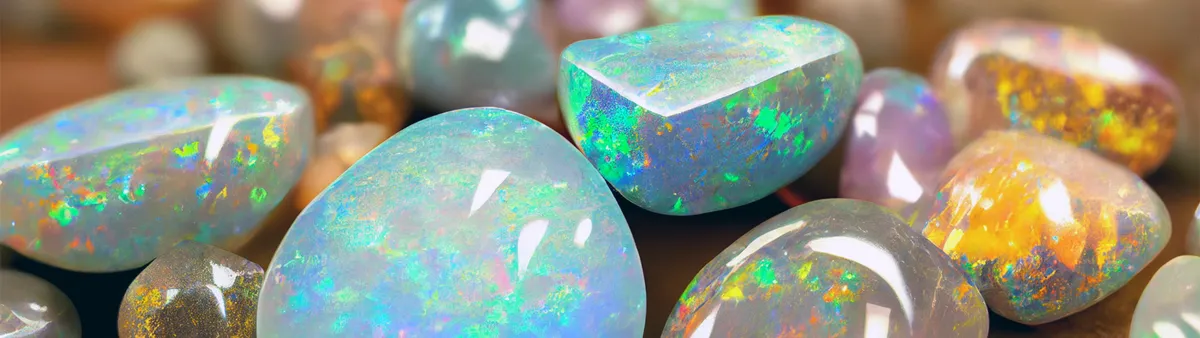
With its mesmerizing flashes of color and fascinating history, opal has captivated people for thousands of years. As the October birthstone, it carries centuries of legends, symbolism, and tradition. Discover intriguing opal facts, explore opal jewelry styles, and learn how to care for this enchanting gem.
The Origin and History of the Opal Birthstone
Opal has captivated people for more than 4,000 years, and its origins are just as intriguing as its shifting colors. The name is thought to come from the Sanskrit upala, meaning “precious stone.” Other scholars connect it to the Greek opallos, or “to see a change of color.”
Ancient Greeks even believed opals formed from Zeus’ joyful tears after his victory over the Titans. Arabic legends said these kaleidoscopic stones came from lightning and would fall from the heavens whenever there were thunderstorms. Indigenous Australians believed that opal was a divine gift from the Creator, so they used it in various rituals.
While these myths give opal an enchanting history, its actual formation is rooted in geology. Rainwater moves through rock, carrying dissolved silica into tiny cracks and cavities. When the water evaporates, silica remains behind and accumulates over millions of years. Precious opal develops when microscopic silica spheres become arranged closely enough to diffract light, producing its characteristic play-of-color.
For centuries, opal has been treasured not only for its beauty but also for the benefits people believed it could provide. Some cultural traditions credited opal with prophetic, protective, and restorative qualities, from warding off lightning to encouraging creativity and happiness. Medieval Europeans called it ophthalmios, or “eye stone,” believing it could benefit eyesight.
The stone was thought to symbolize hope, purity, and good fortune. However, they later became linked to misfortune, following the publication of Sir Walter Scott’s Anne of Geierstein in 1829. Fortunately, Queen Victoria later helped renew interest in the magnificent gem.
Today, Australian opals are especially renowned, with Australia producing approximately 95% of the world’s precious opal. From ancient legends to modern jewelry, opal’s enduring appeal lies in its ability to surprise us with every flash of color.
How Opal Became the Birthstone for October
Birthstones did not begin as the neatly organized monthly tradition we know today. Their history is often connected to the 12 gemstones adorning Aaron’s breastplate in the Book of Exodus. Centuries later, gemstones became linked with the months and zodiac signs, and people began wearing particular stones at specific times for their supposed talismanic or therapeutic benefits.
The modern custom of wearing one stone for your birth month developed in Europe between the 16th and 18th centuries. October’s birthstone has also changed with different traditions and official lists. Earlier lists associated October with both opal and aquamarine.
In 1912, the American National Retail Jewelers Association created a standardized U.S. birthstone list and designated opal alongside tourmaline for October. That pairing remains recognized in the United States today.
So, how did opal become October’s birthstone? There is no single moment that explains the connection; rather, it developed through centuries of changing birthstone traditions. Today, this precious stone remains closely associated with October, admired for its remarkable iridescence and celebrated in birthstone jewelry around the world.
The Meaning Behind Opal as the October Birthstone
Opal’s symbolism has evolved through centuries of admiration and folklore. Today, the October birthstone is commonly associated with hope, purity, truth, happiness, and good luck.
Historically, its ability to display a spectrum of colors also led people to believe that it contained the virtues of every colored gemstone. This made opal especially intriguing as a symbol of abundance, possibility, and positivity.
Various cultures attributed supposed benefits to the gem as well. Historical beliefs held that opal could protect its wearer, benefit the eyes, preserve blond hair color, and encourage happiness or success. These ideas are part of opal’s folklore rather than scientifically proven properties, but they remain an interesting part of its story.
Opal has another meaningful connection through anniversaries. A precious opal is traditionally designated as the 14th wedding anniversary jewelry gift, giving couples a colorful gemstone with which to commemorate their journey together.
Whether someone wears an opal to celebrate an October birthday or receives one after 14 years of marriage, its distinctive rainbow-like radiance makes it a fitting symbol of hope, beauty, and enduring connection.
Opal Birthstone Jewelry for October Babies
The best opal jewelry lets the gemstone take center stage. Its incredible color range and magnificent opalescence make it especially appealing for October birthstone jewelry, whether you prefer the soft glow of white opals, the dramatic contrast of black opal, the warmth of fire opal, the earthiness of boulder opals, or the distinct luminescence of crystal opals.
When creating an opal piece, durability should be considered alongside beauty. Opal generally has a Mohs hardness of 5.0 to 6.5, so it requires more care than harder gems. A thicker stone and protective setting can help reduce the risk of damage.
Pendants and earrings are often practical choices because they experience less contact, while opal rings may be better suited to occasional wear. Black opal is among the opal varieties known for greater durability, so opt for that if you want a piece that will stand up to more frequent wear.
When creating a custom piece, consider an opal pendant featuring an engraved name or meaningful date, a birthstone necklace paired with a personalized charm, or mismatched opal earrings that highlight each stone’s natural character. Also consider what metals they prefer—from sterling silver to gold.
Keep in mind that glass can imitate opal, while doublets or triplets don’t always include genuine opals. A reputable jeweler can help you understand the difference before you purchase.
Opal Jewelry Care and Cleaning
Caring for opal jewelry starts with gentle cleaning. Use warm, soapy water and a soft cloth to remove built-up dirt, then dry the piece carefully. Avoid harsh cleaners, abrasive brushes, steam, and ultrasonic cleaning.
Storage matters, too. Keep opal pieces individually in a soft pouch or padded jewelry box so they cannot rub against one another or harder gemstones like diamonds, sapphires, and rubies. A cool location away from direct sunlight and heat is preferable.
For broken or damaged pieces, professional repair is the safest choice. A qualified jeweler can inspect the opal and its setting and determine whether the mounting can be repaired, the gemstone can be restored, or a replacement is needed. Avoid DIY adhesives and repairs that could cause further damage.
With proper maintenance, your opal birthstone jewelry can retain its beauty and distinctive opal displays while remaining a treasured piece for years to come.