
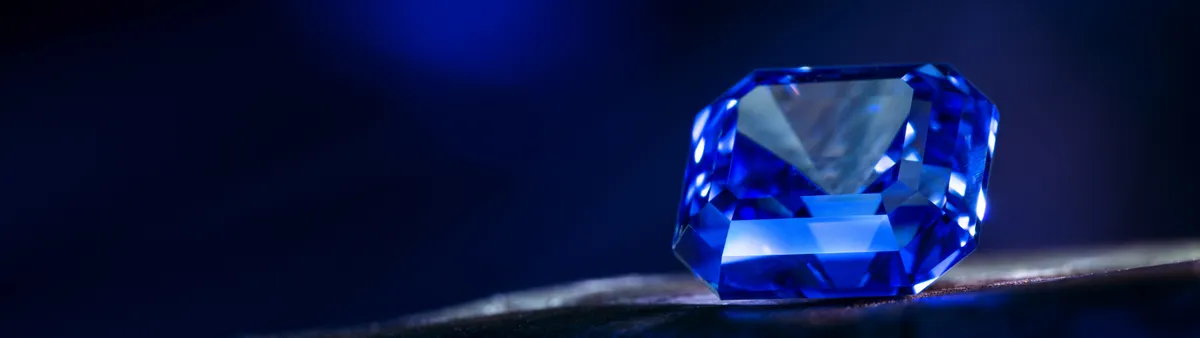
What makes sapphire such a fascinating gemstone? Beyond its iconic blue color, this September birthstone has a history filled with legends, surprising uses, and magnificent symbolism. Explore sapphire facts, discover its many colors, get meaningful custom design ideas, and learn how to care for it!
The gem sparked various extraordinary legends. Ancient Persians believed the earth rested upon a colossal sapphire and reflected its blue color into the sky. Some time later, early Christians thought sapphires were shards of the heavenly throne that had fallen into the mortal world.
Modern geology gives us a very different explanation for sapphire’s origins. Natural sapphire crystals form over millions of years when the right chemicals are subjected to intense heat and pressure. Some sapphires form through metamorphic processes associated with cataclysmic tectonic activity, while others occur in volcanic environments.
Weathering eventually releases these exceptionally durable crystals, concentrating in numerous deposits around the world. Notable sapphire-producing regions include Sri Lanka, Madagascar, Myanmar, Australia, and Kashmir.
Nicknamed the “Land of Gems,” Sri Lanka has been a particularly important source since 480 BC and is renowned for exceptional blue and star sapphires. It is also known for the Star of Adam, a 1,404.49-carat stone often cited as one of the largest sapphires in existence.
Ancient Greeks believed sapphire could inspire prophetic insights, while Arabian kings wore the stone for protection against envy and injury. Sailors carried sapphires for protection at sea, and travelers wore them as amulets for courage and safety.
The gem also became an important religious symbol across a variety of faiths. Buddhists associated sapphire with spiritual enlightenment, while Hindus used it in practices of worship. For medieval Christians, clergy wore sapphire rings as symbols of heaven, chastity, and piety. They also incorporated the gem into church treasures and vestments.
Some of the most unusual historical uses involved healing. Ancient Egyptians reportedly ground sapphires into eye-wash, and the belief in sapphire’s ability to cure ailments of the eyes continued into medieval Europe. Some healers also placed or rubbed sapphires against affected areas to cure a wide array of wounds and diseases—both physical and mental.
From protective amulets to modern technology, sapphire’s uses have evolved considerably. As scientific understanding advanced, its supposed healing powers gave way to the appreciation and application of its exceptional hardness and durability.
While natural sapphire remains treasured in fine jewelry, the development of synthetic sapphire in 1902 expanded its role into electronics and other technologies. Its enduring beauty and strength make it just as captivating today as it was centuries ago.
Over the centuries, these gems became connected with astrology and mystical benefits, among other things. By the Middle Ages, people began wearing different gemstones at particular times of the year, believing their special qualities were most powerful during that time.
The familiar practice of choosing a gemstone based on your birth month, however, took shape much later—during the 16th to 18th centuries, to be specific. Some older traditions associated sapphire with April. In various astrological traditions, sapphire is also linked to the zodiac signs Taurus and Gemini.
In 1912, the modern list was standardized by the American National Retail Jewelers Association, now known as Jewelers of America. This helped establish sapphire as September’s official birthstone, a designation that remains recognized today.
Today, sapphire brings centuries of symbolism into contemporary September birthstone jewelry. Whether worn as a birthstone ring, pendant, or another treasured piece, it offers a beautiful way to celebrate your birth month while carrying forward a tradition shaped by a colorful history.
Sapphires are believed to protect against negative energies, ease mental tension, encourage meditation, and harness higher powers. While these effects have not been scientifically established, they remain an important part of the gemstone’s cultural symbolism.
Trace elements, such as iron, titanium, vanadium, and chromium, also give rise to fancy colored sapphires, each carrying additional symbolism:
Scoring a hardness of 9 on the Mohs scale, sapphire is remarkably durable, reinforcing its association with enduring love. Typically, it’s also included in gifts to celebrate a married couple’s 5th and 45th wedding anniversaries.
The most famous sapphire jewelry may be the 12-carat oval Ceylon blue sapphire engagement ring chosen by Princess Diana in 1981. Prince William later gave the same ring to Kate Middleton when he proposed in 2010.
Whether worn in a birthstone necklace or given as a declaration of love, sapphire proves that some gemstones become meaningful not simply because of how beautifully they sparkle, but also because of the stories they carry.
You can also find white or colorless sapphires, multicolored parti sapphires, star sapphires, and color-changing varieties that reveal distinct hues in different lighting. Padparadscha sapphires are particularly prized for their rare pink-orange color.
For September babies, these possibilities make customization especially fun. Choose your favorite sapphire color, combine multiple stones to represent the people closest to you, or add personalized touches like names, initials, and important dates.
Yellow gold can bring warmth to the design, while white gold offers a cool contemporary look. Thoughtful design details such as these can transform a simple pendant, bracelet, or ring into truly personalized birthstone jewelry.
Because visual inspection and at-home tests cannot reliably identify imitations from genuine sapphires, professional testing and certification are the better choice for valuable stones. A reputable jeweler should also be able to tell you the sapphire's origin and treatment history.
Regularly clean your jewelry with warm water, mild soap, and a soft brush, then rinse and dry it thoroughly with a soft, lint-free cloth. Fracture-filled and dyed sapphires should only be cleaned with a damp cloth, while other sapphires may tolerate ultrasonic or steam cleaning. When in doubt, give us a call.
Proper storage matters, too. Give each sapphire piece its own soft pouch or compartment to prevent contact with other jewelry. Diamonds and moissanite are harder than sapphire and may scratch it.
When wear and tear eventually takes its toll, professional repair is the way to go. Rather than attempting to fix a broken setting or loose stone yourself, let us properly assess and restore the piece. After all, a gemstone with this much history deserves to be cared for.
The Origin and History of the Sapphire Birthstone
September’s birthstone has been treasured for thousands of years, but let us start sapphire’s story with the origins of its name. The word “sapphire” comes from the Latin sapphirus, derived from the Greek sappheiros, terms historically associated with blue stones.The gem sparked various extraordinary legends. Ancient Persians believed the earth rested upon a colossal sapphire and reflected its blue color into the sky. Some time later, early Christians thought sapphires were shards of the heavenly throne that had fallen into the mortal world.
Modern geology gives us a very different explanation for sapphire’s origins. Natural sapphire crystals form over millions of years when the right chemicals are subjected to intense heat and pressure. Some sapphires form through metamorphic processes associated with cataclysmic tectonic activity, while others occur in volcanic environments.
Weathering eventually releases these exceptionally durable crystals, concentrating in numerous deposits around the world. Notable sapphire-producing regions include Sri Lanka, Madagascar, Myanmar, Australia, and Kashmir.
Nicknamed the “Land of Gems,” Sri Lanka has been a particularly important source since 480 BC and is renowned for exceptional blue and star sapphires. It is also known for the Star of Adam, a 1,404.49-carat stone often cited as one of the largest sapphires in existence.
Fascinating Historical Uses
Sapphire’s history extends well beyond jewelry, with cultures around the world attributing protective, spiritual, and medicinal powers to the gem.Ancient Greeks believed sapphire could inspire prophetic insights, while Arabian kings wore the stone for protection against envy and injury. Sailors carried sapphires for protection at sea, and travelers wore them as amulets for courage and safety.
The gem also became an important religious symbol across a variety of faiths. Buddhists associated sapphire with spiritual enlightenment, while Hindus used it in practices of worship. For medieval Christians, clergy wore sapphire rings as symbols of heaven, chastity, and piety. They also incorporated the gem into church treasures and vestments.
Some of the most unusual historical uses involved healing. Ancient Egyptians reportedly ground sapphires into eye-wash, and the belief in sapphire’s ability to cure ailments of the eyes continued into medieval Europe. Some healers also placed or rubbed sapphires against affected areas to cure a wide array of wounds and diseases—both physical and mental.
From protective amulets to modern technology, sapphire’s uses have evolved considerably. As scientific understanding advanced, its supposed healing powers gave way to the appreciation and application of its exceptional hardness and durability.
While natural sapphire remains treasured in fine jewelry, the development of synthetic sapphire in 1902 expanded its role into electronics and other technologies. Its enduring beauty and strength make it just as captivating today as it was centuries ago.
How Sapphire Became the Birthstone for September
The tradition of birthstones has a long and fascinating history, with roots often traced to the 12 gemstones adorning Aaron’s breastplate, one of which was believed to be sapphire, as described in the Book of Exodus.Over the centuries, these gems became connected with astrology and mystical benefits, among other things. By the Middle Ages, people began wearing different gemstones at particular times of the year, believing their special qualities were most powerful during that time.
The familiar practice of choosing a gemstone based on your birth month, however, took shape much later—during the 16th to 18th centuries, to be specific. Some older traditions associated sapphire with April. In various astrological traditions, sapphire is also linked to the zodiac signs Taurus and Gemini.
In 1912, the modern list was standardized by the American National Retail Jewelers Association, now known as Jewelers of America. This helped establish sapphire as September’s official birthstone, a designation that remains recognized today.
Today, sapphire brings centuries of symbolism into contemporary September birthstone jewelry. Whether worn as a birthstone ring, pendant, or another treasured piece, it offers a beautiful way to celebrate your birth month while carrying forward a tradition shaped by a colorful history.
The Meaning Behind Sapphire as the September Birthstone
For centuries, sapphire has been admired as more than a beautiful gemstone. As the September birthstone, it has come to symbolize truth, sincerity, loyalty, protection, wisdom, and lasting beauty. Its traditional meanings make particular sense when you consider the gem’s remarkable durability and timeless appeal.Sapphires are believed to protect against negative energies, ease mental tension, encourage meditation, and harness higher powers. While these effects have not been scientifically established, they remain an important part of the gemstone’s cultural symbolism.
Trace elements, such as iron, titanium, vanadium, and chromium, also give rise to fancy colored sapphires, each carrying additional symbolism:
- Yellow sapphire: Prosperity and good health
- White Sapphire: Spirituality and cosmic consciousness
- Green sapphire: Tranquility and balance
- Blue sapphire: Healing and abundance
- Violet/purple sapphire: Wisdom and imagination
- Pink sapphire: Positive energy
- Black sapphire: Success and intuition
Scoring a hardness of 9 on the Mohs scale, sapphire is remarkably durable, reinforcing its association with enduring love. Typically, it’s also included in gifts to celebrate a married couple’s 5th and 45th wedding anniversaries.
The most famous sapphire jewelry may be the 12-carat oval Ceylon blue sapphire engagement ring chosen by Princess Diana in 1981. Prince William later gave the same ring to Kate Middleton when he proposed in 2010.
Whether worn in a birthstone necklace or given as a declaration of love, sapphire proves that some gemstones become meaningful not simply because of how beautifully they sparkle, but also because of the stories they carry.
Sapphire Birthstone Jewelry for September Babies
Whether you prefer something classic, colorful, or completely unconventional, sapphire can fit your vision. While blue remains the most familiar and sought-after color, sapphire’s fancy colors include yellow, orange, pink, purple, green, gray, black, brown, and shades in between.You can also find white or colorless sapphires, multicolored parti sapphires, star sapphires, and color-changing varieties that reveal distinct hues in different lighting. Padparadscha sapphires are particularly prized for their rare pink-orange color.
For September babies, these possibilities make customization especially fun. Choose your favorite sapphire color, combine multiple stones to represent the people closest to you, or add personalized touches like names, initials, and important dates.
Yellow gold can bring warmth to the design, while white gold offers a cool contemporary look. Thoughtful design details such as these can transform a simple pendant, bracelet, or ring into truly personalized birthstone jewelry.
Common Lookalikes
Glass, synthetic spinel, and dyed quartz can imitate sapphire, while lab-grown sapphires are genuine corundum created artificially rather than mined. Natural sapphires also commonly undergo heat treatment to improve color or clarity.Because visual inspection and at-home tests cannot reliably identify imitations from genuine sapphires, professional testing and certification are the better choice for valuable stones. A reputable jeweler should also be able to tell you the sapphire's origin and treatment history.
Sapphire Jewelry Care and Cleaning
A sapphire may be durable enough for everyday wear, but a little care will help preserve its brilliance. Avoid harsh chemicals, and apply perfume or hairspray before putting on your jewelry.Regularly clean your jewelry with warm water, mild soap, and a soft brush, then rinse and dry it thoroughly with a soft, lint-free cloth. Fracture-filled and dyed sapphires should only be cleaned with a damp cloth, while other sapphires may tolerate ultrasonic or steam cleaning. When in doubt, give us a call.
Proper storage matters, too. Give each sapphire piece its own soft pouch or compartment to prevent contact with other jewelry. Diamonds and moissanite are harder than sapphire and may scratch it.
When wear and tear eventually takes its toll, professional repair is the way to go. Rather than attempting to fix a broken setting or loose stone yourself, let us properly assess and restore the piece. After all, a gemstone with this much history deserves to be cared for.